Overview
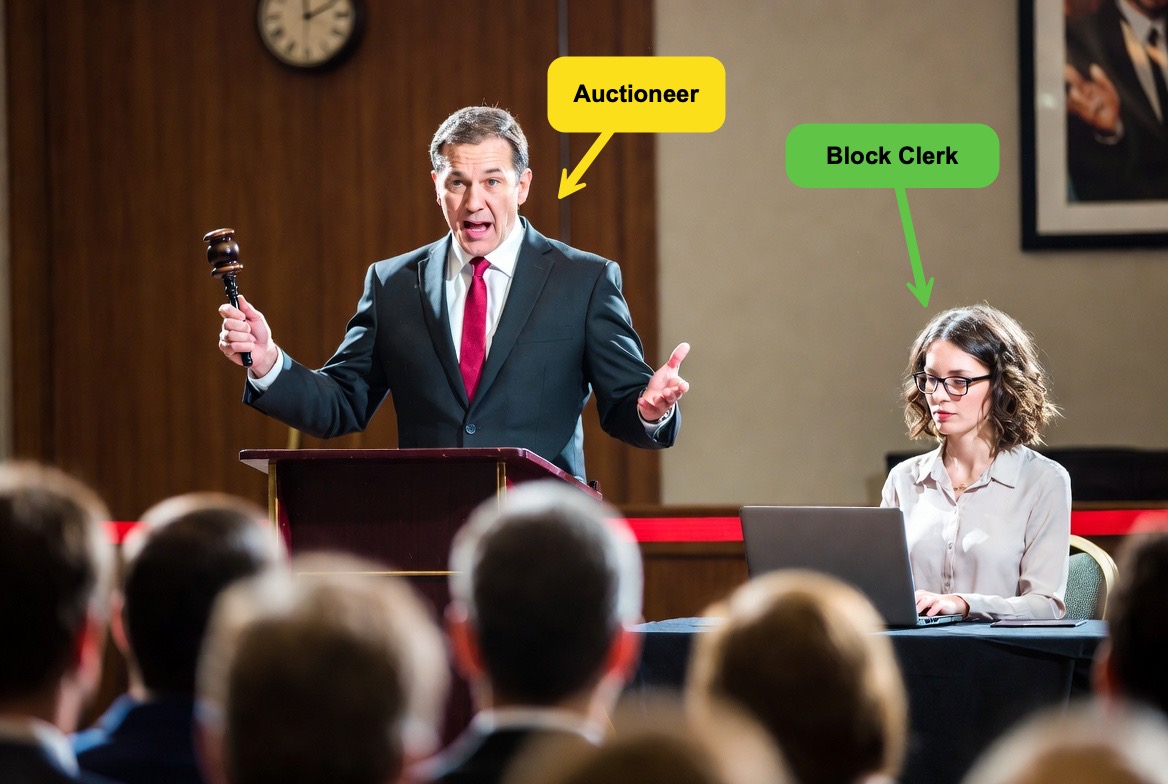
A live auction moves faster than typing. The auctioneer can go from $5,200 to $5,500 in under a second, and an online bidder miles, or even countries, away has to react in real time.
Without a purpose-built block clerking screen, your team ends up fighting the software instead of following the auction floor. Bids can be missed, online bidders can fall behind, and the block clerk gets stuck trying to keep up with a platform that was not built for live auction speed.
Selling Lane’s block clerking interface is the bridge between the room and the internet.
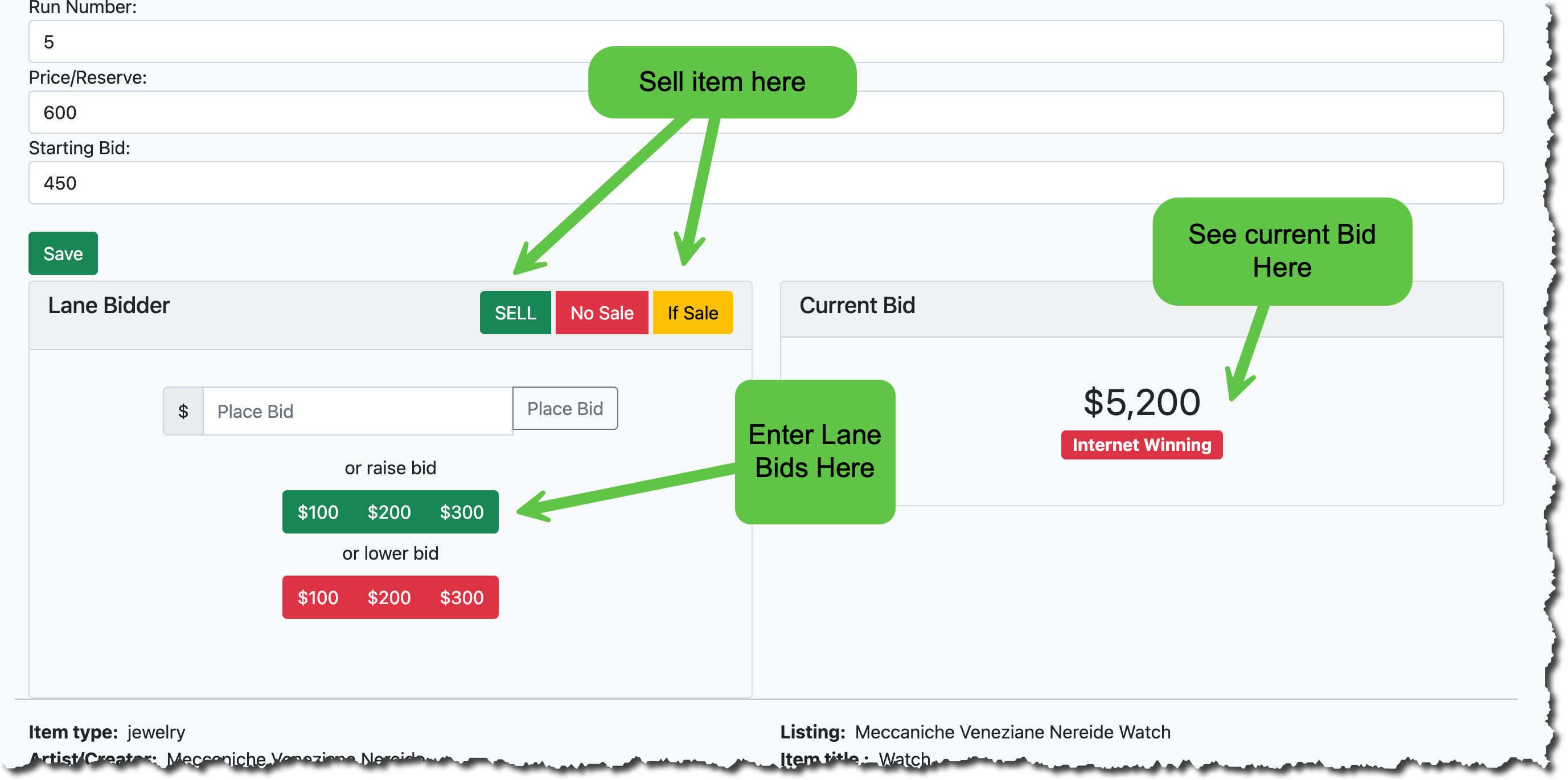
Each lot opens with the run number, price or reserve, and starting bid already filled in. The clerk can raise the bid with one tap using preset increments that adjust based on the value of the item. Lower-value items can use smaller bid jumps, while higher-value items can use larger increments, helping the clerk follow the auctioneer’s rhythm without typing every bid manually. And when a bidder or the auctioneer jumps the bid to a higher number, the clerk can quickly enter the custom amount and keep the auction moving.
Matching one-tap controls also let the clerk lower the bid when the auctioneer takes one back or corrects the call.
When an online bidder beats the floor, a live Internet Winning indicator turns on, so the clerk and auctioneer know exactly where the bid stands. The auctioneer can confidently call, “Internet bidder at $5,300. Do I have $5,400?” without losing track of who is leading.
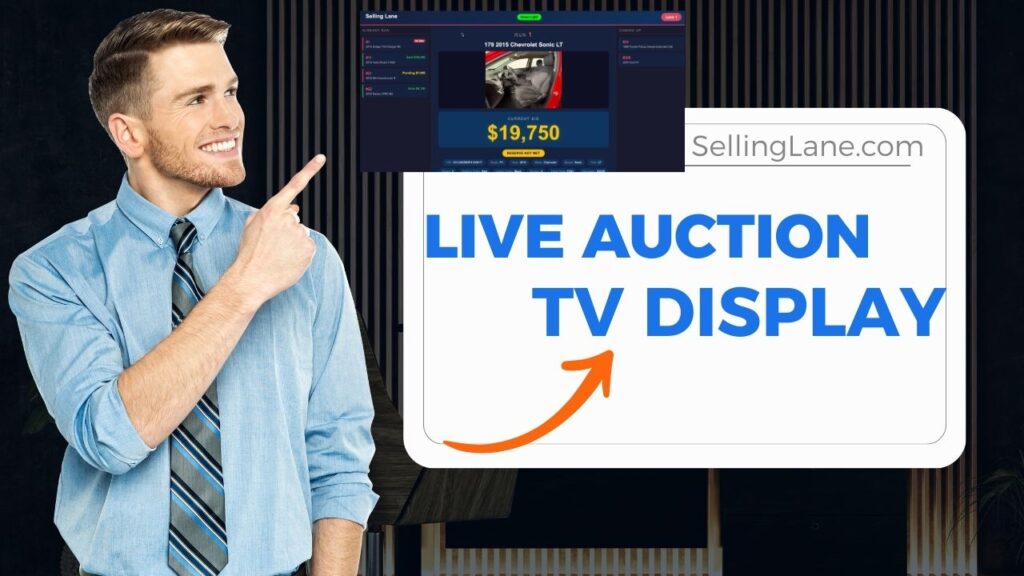
That clarity helps everyone keep up with the auction in real time: the ringmen, in-person bidders, live TVs in the lane, online bidders, and the audience watching the sale.
When the gavel drops, the clerk can close the lot with a single tap: SELL, No Sale, or If Sale. The system closes the lot and queues the next run number, so the clerk does not break stride and the next lot is ready when the auctioneer is.
Fast enough for the auction floor. Simple enough to keep every bidder in sync.
"The clerk's job hasn't changed in a hundred years — keep up with the auctioneer. The software just stopped getting in the way."
Key Benefits
📋
Pre-Loaded Lot Info
Run number, price/reserve, and starting bid load automatically the moment the auctioneer hits a new lot. The clerk doesn't type anything for routine lots.
⚡
One-Click Raise and Lower
Tap $100, $200, or $300 to raise the bid the way the auctioneer is calling it. Matching buttons to lower the bid when a bid is taken back. Tuned for the pace of a live ring.
🌐
Internet Winning Indicator
When an online bidder beats the floor, an unmistakable Internet Winning pill lights up on the clerk's screen. The auctioneer knows where to ask next — no accidental hammers past a remote winner.
🔨
Three-Way Deal Close
SELL, No Sale, and If Sale buttons match the three real outcomes that come off an auction block. Hit the right one and the platform handles the invoice, the consignor record, and the next lot.
🔄
Mistake-Friendly
Auctioneers take bids back. The clerk gets one-click revert via the lower-bid buttons — no menus, no confirmations, no slowing down the call.
📺
Synced With Every Other Screen including Live TV
Whatever the clerk does shows up instantly on the auctioneer's dashboard, the room's TV display, and every online bidder's screen. One source of truth, zero refresh hits.
How It Works
1
Lot/Item Loads Automatically
When the auctioneer moves to a new run, the clerk's screen loads the run number, price/reserve, and starting bid from the catalog — no hunting, no typing.
2
Track the Auctioneer's Calls
Tap the raise or lower buttons to mirror the auctioneer's calls in real time. The Place Bid field accepts custom amounts when the auctioneer jumps off the increment.
3
Watch the Online Side
When a remote bidder takes the high, the Internet Winning pill turns red. The clerk relays it to the auctioneer with a glance, and the next ask goes online.
4
Hammer Down
Tap SELL when the gavel drops. No Sale or If Sale handle the cases when the lot doesn't clear cleanly. The platform finalizes the invoice, queues the next run, and the clerk is ready before the auctioneer is.
What's Included
- Run number, price/reserve, and starting bid pre-loaded per lot
- One-click raise bids in $100, $200, $300 increments (configurable per auction)
- One-click lower bids for take-backs and corrections
- Custom amount in the Place Bid field when the auctioneer breaks pattern
- Internet Winning indicator so the room knows when an online bidder is on top
- Three-way close: SELL, No Sale, or If Sale — matches every real auctioneer outcome
- Auto-advance to the next run after hammer
- Synced in real time with the auctioneer's dashboard, the TV display, and every online bidder's screen
- Pairs with simulcast streaming for video + bid sync remote bidders can trust
- Included in every plan — no per-clerk seat license, no per-lot fee